Featured
Matthew Richardson is in Japan. So is Harrie Lavreysen. Joe Truman has gone back, and on the women's side Ellesse Andrews, Hetty van de Wouw and Mathilde Gros have joined them. Put those six names together and the instinct is to read the story the way modern track cycling usually invites it to be read: medals, titles, speed, hierarchy, the familiar order of who has won what and who is expected to win next.
Japan does not really need to arrange the story that way.
For a few months, the indoor sprint world is not quite the centre of events. The polished international calendar, the rhythm of championships, the cleaned-up television version of keirin that much of the sport now treats as standard - all of that looks slightly different when it lands in the country where the event never stopped belonging to its own culture first.
Keirin was launched in Japan in 1948, and JKA still presents it not simply as a race but as a public institution whose revenues support areas including social welfare, sport, education and disaster relief.
Live Video and Results
The 2026 Japanese summer programme gives international track fans something unusual: a defined route into a sport that is normally easier to admire from afar than to follow closely. Matthew Richardson, Harrie Lavreysen, Joe Truman, Ellesse Andrews, Hetty van de Wouw and Mathilde Gros have been authorised for nine Keirin World Series rounds classed F1, plus the World Cyclist Fund Keirin at Wakayama classed GIII. The challenge for most readers is not understanding why that matters. It is knowing where to watch, where to find results, and how to keep track of what they are actually looking at.
The Wider Picture
In most of the world, track cycling survives as a sport in search of structure. In Japan, keirin has long been something larger than that. Since the first meeting at Kokura on 20 November 1948, it has existed not only as a race but as a public-benefit system, with revenues directed into areas including the machinery industry, social welfare, sport, medicine, education and disaster relief. That difference helps explain why keirin has retained cultural weight while so much of international track cycling still struggles to hold a coherent shape.
Girls Keirin
Ellesse Andrews, Hetty van de Wouw and Mathilde Gros are not travelling to Japan simply as three elite female sprinters adding another race block to the year. They are stepping into a version of keirin that has its own recent history, its own audience and, in some important ways, its own logic. Girls' Keirin has been running since July 2012 and is now presented in Japan as an active and popular part of the wider sport.
Format Guide
One of the easiest assumptions to make from outside Japan is that “racing in Japan” means entering the summit of domestic keirin. It does not. The sport is built on a formal ladder of event grades and rider ranks, culminating in the KEIRIN Grand Prix on 30 December. The 2026 international programme sits inside that system, but it is not the whole system. That distinction changes how this summer should be read.
The Velodrome
The 2026 international return to Japanese keirin will not be decided by one rider, one tactic or one result. It will be shaped by ten tracks spread across the country: from the birthplace of keirin at Kokura to the final stop at Kawasaki, with northern rounds, seaside rounds, Kansai rounds and one crucial GIII interruption at Wakayama. To understand what this summer really is, you first have to understand where it is happening.
Racing Tactics
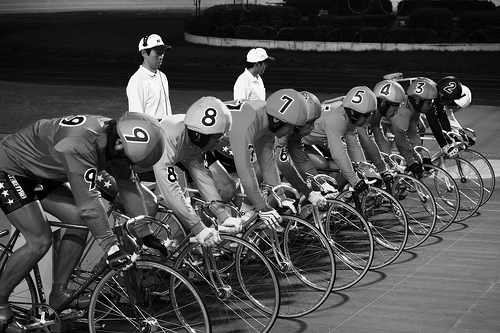
For many outside Japan, keirin begins when the pace lifts and the sprint opens. In Japan, the race starts much earlier than that. It starts in the line: who forms it, who protects it, who trusts it, who tries to break it, and who has read it well enough to know when it is about to come apart. This is not a prelude to the race. It is the way the race is written.
Keirin School
For most of the world, keirin is a race. In Japan, it begins much earlier than that. Before the lines, before the crowd, before the familiar late-race violence of the international version, there is the school: early starts, drills, cleaning duty, hill climbing, lap work, science classes, rollers, race simulation and a daily structure designed to do more than build fitness. It builds a particular kind of rider.
Origins and Identity
Olympic keirin carries the Japanese name, the paced opening and the late-race surge most track fans recognise immediately. But the domestic sport from which it came is broader, stricter and far more deeply structured than the international version most of the world thinks it knows. Japan did not simply create an event. It built a complete sporting world around it.
The Riders
Six of the world's leading track sprinters will line up on Japan's keirin circuit in 2026, bringing Olympic pedigree, world titles and fresh international intrigue to one of cycling's most distinctive stages. From established champions to riders chasing another career-defining chapter, each arrives with a different background, racing style and reason for being watched closely. This page introduces the six international riders selected for the series, with a quick look at who they are, where they come from, and the results that make them such significant additions to the field. For followers of track cycling, this is where the international story begins.