By the time most track cyclists arrive at the track, a great deal has already been decided about how they will train, how they will race and how they will think about themselves.
One reason Japanese keirin still feels culturally different from the UCI sprint world is that it has never fully separated athletic development from institutional discipline. In the modern international system, riders are usually presented as finished athletes moving through an elite programme: refined, specialised, optimised. In Japan, the sport still carries a much stronger sense that entry has to be earned through structure. The school sits behind the mystique, but it also explains it.
The day
The word "school" sounds almost too soft for it.
In keirin, it means routine. It means order. It means a day with almost no wasted space in it.
The schedule tells the story. Wake-up comes at 6:30. Fifteen minutes later there is roll call, drills and morning cleaning. Breakfast follows. Then hill climbing. Then lap training. Then more lap training. Lunch. Science classes. Rollers. Race training. More race training. Dinner. Lights out at 10:00. By the end of the day, students have moved through a structure that is physical, educational and behavioural all at once. They also eat accordingly: around 1,300 calories at breakfast and roughly 4,500 calories across the day.
Keirin school is not only about making riders stronger. It is about teaching them to live inside a discipline.
The morning cleaning duty is not an accidental detail. Neither is the roll call. Neither is the split between physical work and classroom time. Even the sequence of the day says something about the sport itself: you do not simply turn up, express yourself and leave. You enter an order and are shaped by it.
A training camp sharpens an athlete for competition. A school shapes what sort of athlete that person is expected to become. In keirin, routine is part of the sport's identity, not just preparation for it.
The physical content of the day carries its own message. Hill climbing is not framed as some optional hardship, but as one of the most feared parts of the whole programme, with gradients so steep they are described as beyond what most people could even move on. Lap training is there not just for speed but for group-racing skill. Towing work pushes riders beyond their usual speed range and improves pedal force. Roller sessions sharpen balance. Race training simulates actual events closely enough that the student is not merely building fitness, but learning how the sport is supposed to feel from the inside.
The discipline
The blend of work is revealing. In many high-performance systems, different forms of development are separated and delegated: strength here, tactical work there, theory somewhere else. Keirin school still presents them as part of one culture. The rider climbs, studies, balances, simulates and repeats. The body and the behaviour are trained together.
The science classes matter for the same reason. They are not there for decoration. Students are taught race rules and training theory before professional debut. That tells you something about keirin's self-image. It is not merely producing athletes capable of riding fast in circles. It is producing riders expected to understand the logic of the sport they are entering.
For all its severity, the school is not anti-modern. It also uses performance-measurement tools to assess pedalling efficiency and give students an objective picture of their ability. This is not a nostalgic institution resisting measurement and science. It is a disciplined sporting culture that has found room for both old structures and modern performance tools.
- 6:30 am - Wake-up
- 6:45-7:40 am - Roll call, drills and morning cleaning
- 7:40-8:10 am - Breakfast
- 9:05-9:50 am - Hill climbing
- 9:55-11:30 am - Lap training
- 11:30-12:30 pm - Lunch
- 12:40-2:15 pm - Science classes
- 2:25-3:10 pm - Roller training
- 3:20-5:00 pm - Race training
- 5:45-6:45 pm - Dinner
- 10:00 pm - Lights out
This is where the gap with the UCI sprint world becomes most visible. In the international system, riders are often framed through individuality: their watts, their speed, their explosiveness, their style, their profile. Keirin certainly has its own stars, but the school reminds you that the domestic sport still begins from somewhere more collective and more regulated. Before a rider becomes legible as a name, they are expected to become legible to the system.
Japanese keirin still feels different even to elite riders who arrive with medals and reputations already secured. That feels especially relevant this summer, with Ellesse Andrews, Hetty van de Wouw, Mathilde Gros, Harrie Lavreysen, Matthew Richardson and Joseph Truman now entering the system for themselves. The sport does not greet them simply as champions. It meets them as entrants. The order comes first.
The difference
The school belongs in the story of keirin's mystique for a reason. From the outside, Japanese keirin can look theatrical, coded and faintly mysterious: lines, ritual, terminology, race cards, tactical grammar. From closer up, much of that mystery begins to look more like structure. Riders wake up. Clean. Climb. Study. Train. Repeat.
The aura comes not from vagueness, but from repetition.
Japanese keirin has never really been just a race format. It has remained a complete sporting world with its own assumptions about what a rider should know, how a rider should behave and what kind of seriousness the sport deserves. The school is not separate from that world. It is one of the places where that world is made.
The aura around Japanese keirin often comes from distance. Up close, much of it turns out to be routine made meaningful through repetition: the same early starts, the same drills, the same cleaning, the same training blocks, the same expectation that belonging comes after discipline, not before.
Seen that way, keirin school is not a curiosity at the edge of the sport. It is one of the clearest windows into why the sport still carries such a distinct identity. It explains why Japanese keirin can feel more formal, more codified and in some ways more severe than the international version. It explains why riders entering that world are not simply learning how to race. They are learning how the sport expects to be lived.
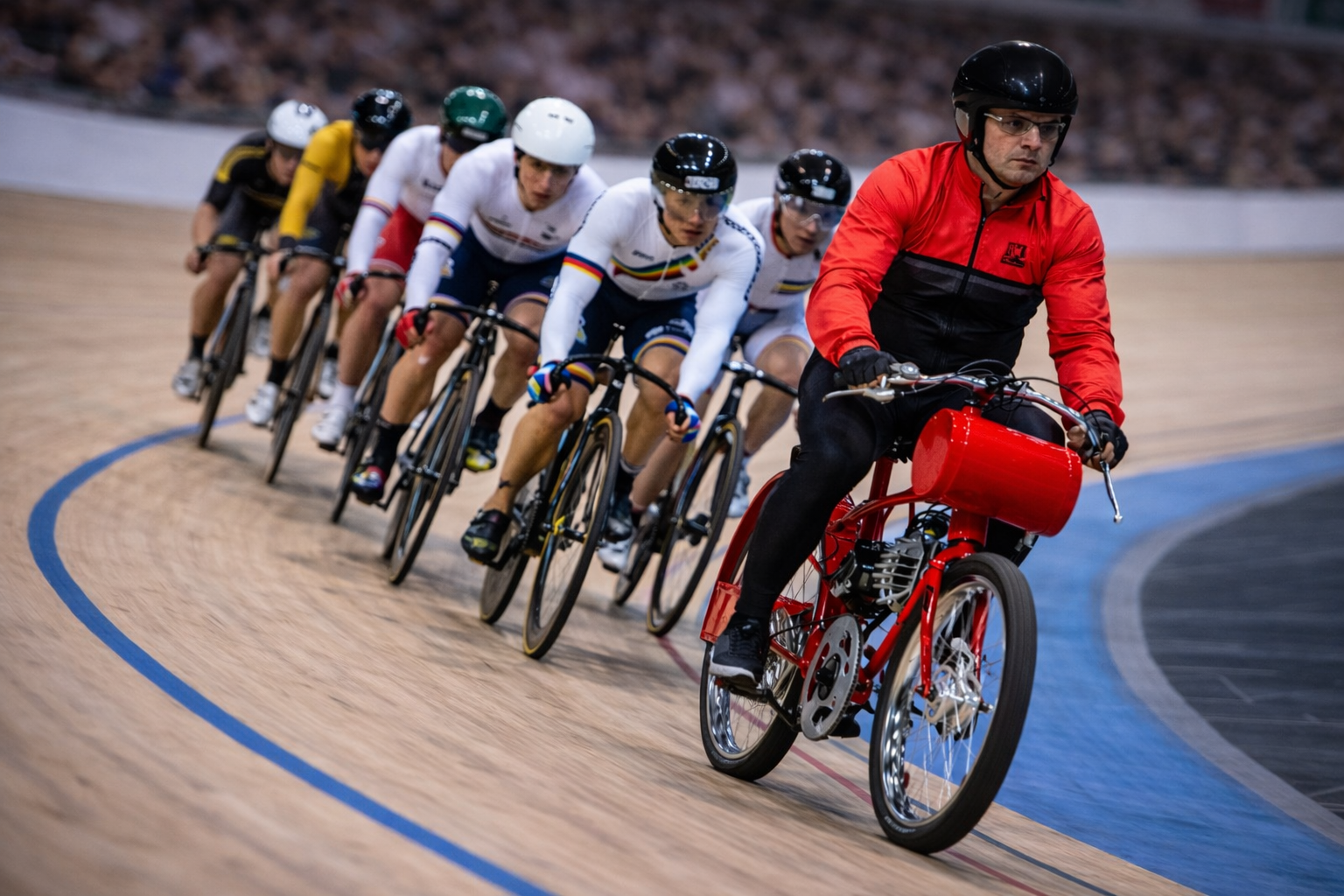
The school matters especially this summer. Not because the six internationals are about to become schoolboys or schoolgirls in any literal sense, but because the environment they have entered still takes seriously the idea that racing begins long before the flag falls. The keirin the rest of the world watches begins with a pace bike and ends with a sprint. The keirin Japan built begins much earlier than that.
It begins with the day.