For track riders, teams and mechanics, the practical answer is simple: if you are buying handlebars for UCI-regulated track racing, use a handlebar that is designed to meet the new requirements. Do not rely on bar tape, guesswork or an old ultra-narrow setup. Buy the correct bar, set it up properly, and remove the doubt.
Velodrome.Shop updated its track handlebar range in June 2025 after the UCI rule changes were announced. Each relevant product page already states whether the handlebar is 2027 UCI legal, with the outside-to-outside measurement made clear in the product description.
The Rule In Simple Terms
From 1 January 2027, track handlebars used in UCI-regulated bunch racing must meet a 350 mm minimum width.
The important detail is how that width is measured.
The UCI measurement is outside-to-outside. That is not the same as the centre-to-centre measurement often printed on handlebars or used in product naming.
This is where confusion can start. A handlebar may be described or marked using its centre-to-centre size, but the UCI rule is based on the outside width. The number printed on the handlebar is not always the number that matters for UCI legality.
Our product descriptions clearly state the relevant outside-to-outside measurement and 2027 UCI status, so customers do not need to interpret the rule themselves.
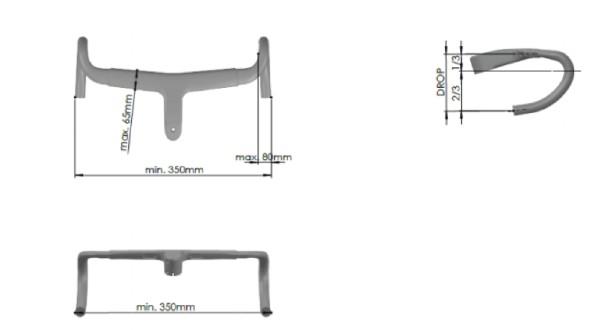
The Two Other Details: Shape And Top Section
The 350 mm minimum width is the part most riders notice first, but there are two other details worth understanding.
The first is the two-thirds rule.
In simple terms, a handlebar cannot meet the required width at one isolated point and then narrow aggressively through the rest of the drop. The bar needs to maintain the required width through the lower two-thirds of the drop area.
For most track riders, this sounds more complicated than it is. It mainly affects bars with heavy flare, taper or unusual shaping. That is more common in road-style designs than in a proper modern track handlebar.
A track handlebar designed for aerodynamic use should not need major drop flare. Heavy flare works against the CdA benefit of using a narrow cockpit in the first place. The purpose of a narrow track bar is to help the rider keep the upper body compact and reduce frontal width. Adding unnecessary flare back into the drop shape undermines that advantage.
Our relevant track bars are designed without that kind of drop flare variation, so the two-thirds rule is not a practical issue for any handlebar we stock.
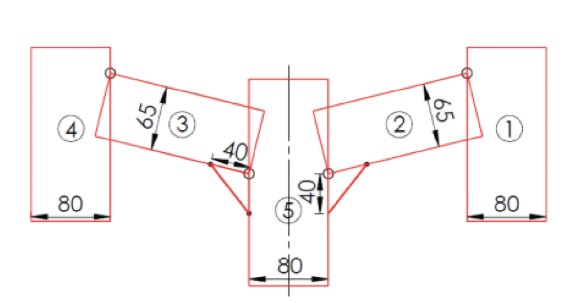
The second detail is the top cross-section.
The UCI has also tightened the permitted size of the handlebar top section, with the allowable box reducing to 65 mm. This matters for very deep or heavily shaped aero tops.
Again, this is not a practical issue for our relevant track bars. They are nowhere near the limit, and the 2027 UCI status is stated clearly within the relevant product descriptions.
Why Your Handlebar May Say A Smaller Size But Still Be Legal
One point that can cause unnecessary concern is the measurement printed on the handlebar itself.
Many handlebars still use the industry-standard centre-to-centre measurement on the product, often printed under the stem clamp area. That is normal and should not cause concern.
The 2027 UCI rule is based on outside-to-outside width, not centre-to-centre width.
For example, a handlebar marked as 325 mm centre-to-centre can measure around 352 mm outside-to-outside, depending on the bar shape and tube profile. In that case, the bar can be above the 350 mm UCI minimum even though the printed number appears lower.
This is why the product description matters more than the number printed under the stem clamp. Each relevant Velodrome.Shop product page clearly states the outside-to-outside measurement and 2027 UCI legality.
The Rule Has Not Ended Narrow Track Bars
The new rule does not mean track riders are going back to wide road-style handlebars.
It sets a new legal floor.
Elite track cycling has moved towards narrower cockpits because the performance logic is strong. A narrower front end can reduce frontal area, help the rider keep the upper body compact, and support the aggressive positions now common in sprint, keirin and bunch racing.
The modern question is not whether narrow bars still make sense. They do. The question is whether the bar is narrow, legal and suitable for serious track racing.
The fastest practical answer is no longer an ultra-narrow bar that needs explanation. It is a purpose-designed, 2027-compliant track bar built around the new limit.
Why Track Handlebars Became Narrower
Older handlebar advice often began with shoulder width. That may still have a place in general cycling fit, but it does not describe how modern elite track cockpits are selected.
Track racing has moved on.
Riders have become more aero-conscious. Positions have become more compact. Sprint and keirin setups have influenced bunch-race equipment. Endurance riders now spend more time in narrow, high-control race positions rather than simply riding a traditional wide drop bar.
A narrower handlebar can help the rider present less width to the air. It can make the elbows and shoulders sit in a cleaner shape. In bunch racing, it can also reduce the amount of physical space the rider occupies when moving through gaps.
Handling still matters. Track racing demands control, confidence and strength through the front end. But at professional level, the direction is clear: once a rider can control the bike, the narrowest legal solution usually makes the most sense.
Why Bar Tape Is Not The Answer
There has been some discussion around using bar tape to build up the external width of a narrow handlebar.
For professional use, that is not the answer.
Bar tape wears. It compresses. It moves. It can be replaced slightly differently from one event to the next. A setup that measures legal when freshly wrapped may not measure the same after use, travel, cleaning or rewrapping.
That is not a risk worth taking.
If a handlebar is too narrow, unclear, or dependent on a tape workaround to pass a 2027 measurement, the sensible solution is to replace it with a bar designed to meet the rule. A rider should not risk a commissaire issue, a delayed start, or possible disqualification over a front-end measurement that could have been solved at purchase.
Safety And Testing
Narrow carbon handlebars need to be strong enough for real track use, not just light or aerodynamic on paper.
Our handlebars have been independently tested by Silverstone Sports Hub, with safety ratings and test information listed within the relevant product descriptions.
Product warranties are also stated clearly, giving riders and teams additional confidence when choosing a carbon cockpit for serious track racing.
The Simple Buying Advice
If you are buying track handlebars now and expect to race into 2027 and beyond, buy with the new rules in mind.
All National Federations will adopt the UCI rulings so the changes will impact all Track Cycling events, not just UCI events such as World Championships and World Cups
The modern answer is a narrow bar that is designed to meet the 350 mm outside-to-outside requirement, without problematic flare, without an oversized top section, and without relying on bar tape to make it legal.
That gives the rider the aerodynamic and positional benefits of a narrow cockpit while avoiding the uncertainty of outdated ultra-narrow equipment.
The aim is not to create a menu of personal comfort widths. Modern track equipment is increasingly built around an optimised professional solution: the narrowest practical legal setup, then the rest of the position built around it.
Why We Do Not Offer Multiple Widths
Modern track handlebar choice is not the same as general road handlebar sizing.
For a road bike, riders often choose bars around shoulder width, comfort, long-duration posture and handling preference. For modern track racing, the priority is different. The handlebar is part of the rider's aerodynamic system.
The aim is to ride as close to the limit of the rules as possible, because that is where the best aero gains are usually found. Once the UCI defines the legal minimum, the logical professional answer is not a full size range. It is a bar designed around that legal performance limit.
That is why our modern track bars are built around an optimised narrow setup rather than a menu of comfort widths. The rider then uses stem length, reach, frame size and cockpit setup to make that position work.
This links directly to our wider guidance on CdA, modern track bike sizing and the importance of front-end measurement under the current UCI position rules.
In track cycling, where races are often decided by fractions of a second, aerodynamic efficiency is as important as raw power. Central to this is Coefficient of Drag Area (CdA)—a measure of how much resistance a rider and their equipment create against the air. A lower CdA means higher speed for the same power, making it a critical focus for riders across all disciplines, from sprint to bunch racing. This guide explores the key factors that influence CdA in track cycling, including handlebar design, stem selection, wheel choice, and rider position, with reference to professional practice and UCI regulations.
Spend enough time around domestic track racing and you start to notice patterns in setup. Across many clubs and race environments, similar themes begin to emerge: a large number of amateur riders are on frames that are technically the wrong size for modern track geometry, and are then trying to correct that mismatch at the front end.
Recommended Handlebar Options
For bunch racing and endurance track events, our Carbon Aero Bunch Bars and Carbon Aero Bunch Pro Bars are designed around the modern narrow track position.
Carbon Aero Bunch Track Handlebar
For sprint, keirin and team sprint use, choose from our sprint handlebar range, with 2027 UCI status clearly stated on each relevant product page.
For riders who are unsure whether their existing handlebar will remain legal, the safest option is to move to a clearly compliant product rather than trying to modify an older setup.
The Cockpit Is A System
Handlebar width is only one part of the front end.
Once the correct bar has been chosen, the rest of the cockpit still needs to work. Stem length, stem angle, reach, stack, hand position and frame geometry all affect whether the rider can hold the position properly and control the bike under race load.
A narrow legal bar is the starting point. The full cockpit has to make that position usable.
That is why the next step after choosing handlebars is checking the stem and reach setup. A rider moving from a wider or more traditional bar to a modern narrow track bar may need to review stem length to preserve the intended hand position and front-end control.
Use our Track Stem Length Calculator to help work out the correct cockpit setup.
Track Cycling Stem Length Calculator
You can also view our new track stem here.
Velodrome.Shop Elite Track Stem
What About Pursuit and Time Trial Bars?
The 350 mm minimum handlebar width discussed above relates to conventional track handlebars used for bunch racing. Pursuit and time trial aero extensions are governed by a different set of requirements under UCI Article 1.3.023.
For fixed aero extensions, the UCI controls both the dimensions of the component and the final rider position. Among the key requirements, each extension has a maximum 50 mm cross-section, while each forearm support can measure up to 125 × 125 mm, must be at least 60 mm long, no more than 85 mm high and may be inclined by a maximum of 30°. The UCI also controls the permitted extension reach and the vertical difference between the arm support and hand position, with different limits according to rider height.
This means that a UCI-compliant aero extension does not automatically make the complete cockpit UCI compliant. Base-bar geometry, riser height, mounting position and the rider's final extension position all need to be considered together.
Pursuit and Time Trial setup are increasingly becoming a more customised approach via specialist manufacturers however we do offer entry level Carbon Pursuit Aero Extensions
Final Thought
The 2027 UCI handlebar rules should not be overcomplicated.
The direction is clear. Narrow track bars remain part of modern performance equipment, but the new standard is a legal 350 mm outside-to-outside solution, with a compliant shape and top section.
Riders and teams should buy bars designed for the rule, avoid tape-based workarounds, and then build the rest of the cockpit properly around that front end.
That is the professional answer: narrow, legal, simple.


