Everyone noticed them. Very few really knew them.
That was part of the power. It was also part of the problem.
China could dominate a sprint session, put riders on the podium, or produce the sort of ride that made coaches from other nations glance at the boards and then back at each other, and still somehow remain separate from the life of the sport around it. Other teams drifted through the ordinary rituals of elite competition - a short interview, a clumsy laugh, a few words by the rail, a nod to a rival, the familiar human untidiness that makes even the hardest environments feel shared. China often did not. It arrived, raced, won, and seemed to disappear back behind its own walls.
For a long time, that was simply how the Chinese sprint programme felt from the outside: formidable, self-contained, difficult to know.
Which is why the change now feels so interesting.
Not because the whole team has suddenly become extrovert. It has not. Not because reserve has vanished. It has not. But because the younger riders seem more willing to step into the shared human space of the sport. They stop. They try. They speak when they can, even if the words still have to travel through a translator. Around the podium and beyond it, there are signs of riders trying to communicate with opponents from other nations, even with limited English, even if the exchange is brief and slightly awkward.
That awkwardness matters. It is human, and that is precisely the point. It is what people look like when they are trying to cross a gap instead of hiding behind it.
The distance around China
And in China's case, that gap has always been larger than language.
For years, too much of the conversation around China in sport has fed off distance. Silence becomes mystery. Mystery becomes suspicion. Before long, athletes stop being treated as athletes and start being treated as symbols - of a system, of a state, of whatever unease other people already wanted to project onto them. Chinese riders did not create that atmosphere, but they have had to live inside it.
A team that is easier to see as human is harder to caricature. A rider who smiles, speaks, mis-speaks, reaches out and tries to connect begins to break something in that old cold narrative simply by being visible as herself. Not because China owes the sport friendliness, and not because reserve is a fault, but because one of track cycling's strongest nations may finally be allowing itself to be known as well as feared.
What makes that change even more interesting is that the old distance was never only cultural.
A system turned inward
China has produced world-class riders for years, but not always inside a system that looked or behaved like one unified outward-facing national programme. When Benoit Vetu returned to lead mainland Chinese track cycling in March 2025, he did not speak like a man inheriting a settled giant. By the end of that year he was saying he was "starting from zero", had to "rebuild everything", and that the pull between provincial interests and national ambition was one of the central obstacles to progress. He also described the National Games as a major frustration and said the work in Hainan was about helping the squad "look and act like a real team".
Vetu, the National Games and the National-Team Challenge
When Benoit Vetu says he wants China to "look and act like a real team", he is talking about more than mood. He is talking about structure. After returning in 2025, Vetu said he was "starting from zero", had to "rebuild everything", and was fighting the pull between provincial priorities and national ambition. He called the National Games a "big frustration" because they can drag riders and coaches back towards domestic goals rather than one unified international plan.
China even skipped the 2025 Track World Championships so leading riders could focus on the National Games. Academic work on Chinese cycling has identified the same tension: provinces and the national team are not always being rewarded for the same thing. If Vetu can change that, he may change far more than sprint results.
That matters because it suggests the old Chinese distance was not simply a matter of personality or media habits. It was built into incentives. In a system where domestic prestige and provincial goals can outweigh the outward rhythm of the international season, a programme naturally risks turning in on itself. It can still produce brilliance - especially in targeted areas such as women's sprinting - but it can also make China appear to the rest of the sport as a nation competing on the world stage while emotionally and structurally facing inward.
Seen in that light, the younger riders trying to speak, connect and show more of themselves begin to look even more significant. They are not just softening the public face of the team. They may be becoming the visible edge of a broader shift: from a programme defined by inward strength to one confident enough to turn outward without losing its edge.
That, in turn, makes the earlier generation look even more remarkable.
The Guo Legacy
Because before any of this - before the translators, before the signs of a more open public face, before the possibility that China might now be becoming something broader than a sprint nation - there was Guo Shuang.
She did not arrive in a sport that seemed especially interested in understanding Chinese riders as people. She arrived instead with the harder currency: authority. Medal after medal, title after title, Olympic podium after Olympic podium. Across her career, Guo won four Olympic medals and six world titles, and in doing so became far more than an important Chinese rider. She became one of the defining women sprinters of her era.
There is something lonely about becoming that sort of figure in a programme the rest of the sport still mostly treats as distant. Your results are public, but your character reaches people only in fragments. The world sees the speed before it sees the person. In some cases, it never really gets to the person at all. Guo had to build respect without the softening effect of familiarity. She was not carried by a warm international narrative. She forced her way into the story through performance.
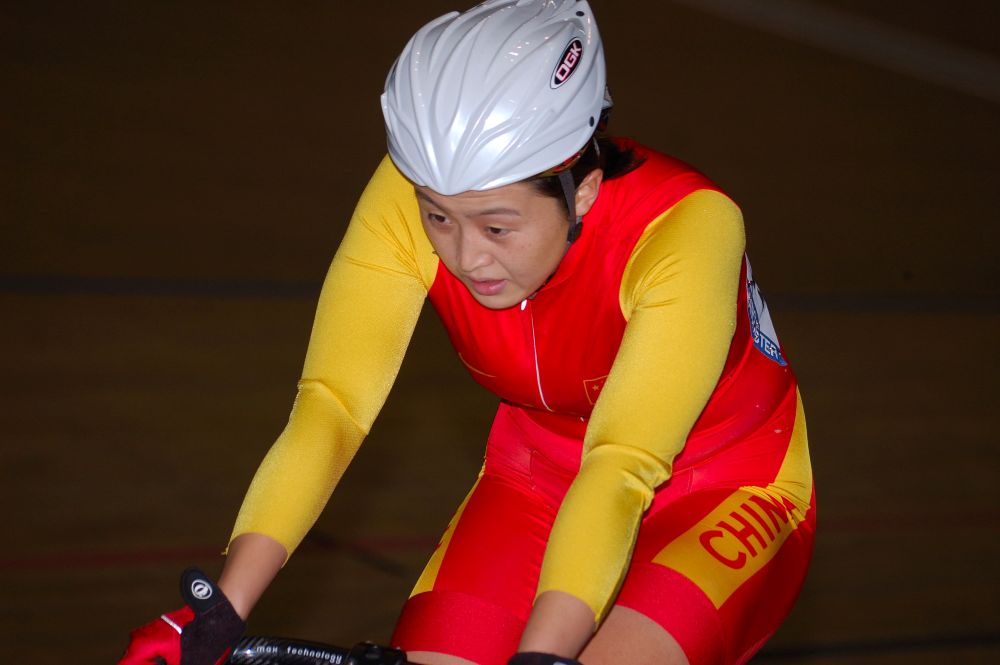
That is why she matters so much here. Not as a decorative pioneer, and not as a name to be nodded at politely before moving on, but as one of the athletes who built China's modern authority in women's sprinting before the rest of the sport had learned how to hold Chinese success in human terms.
China had already chosen women's sprinting as a place to build genuine international strength, and Guo became the rider through whom that ambition acquired shape.
The women who made China feared
Then came the next wave, and with it a shift from elite presence to lasting force.
Gong Jinjie and Zhong Tianshi turned the women's team sprint into one of the clearest expressions of Chinese track power. Rio 2016 mattered because they won China's first Olympic cycling gold. Tokyo mattered because Bao Shanju and Zhong Tianshi won again after setting a world record of 31.804 in the heats, proving that Rio had not been an isolated peak but part of a sustained standard.
Chinese women's sprinting was no longer simply dangerous, it had become one of the constants around which other nations built their fear.
That is the inheritance Benoit Vetu has walked back into.
Vetu and the Next Phase: More Than a Sprint Coach
Which is why his role is more interesting than the lazy version of this story allows. The lazy version says a respected foreign coach has returned to modernise China. That would be unfair to the women who built the programme and too shallow to explain the task in front of him.
Chinese women's sprinting does not need inventing. It does not need validating. It is already one of the great specialist strengths in modern track cycling.
The real question is different now. It is whether that excellence can become the base for something larger.
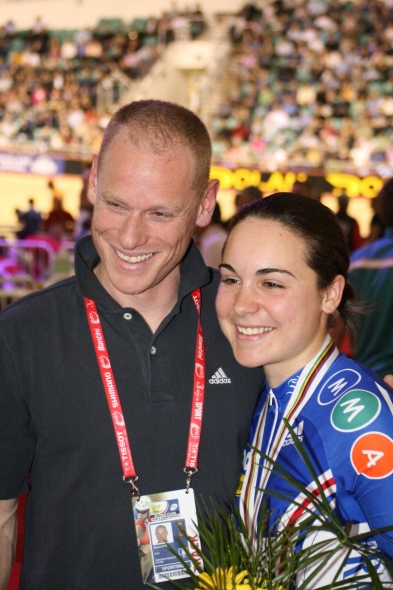
Vetu is fascinating because he seems to sit exactly at that point of tension. He was there for the Rio chapter. He then spent years in Japan. Now he is back in China at a moment when the challenge is no longer simply to produce another frightening women's sprint squad. The challenge is to shape something bigger than that: a programme that can carry Chinese excellence beyond its traditional centre of gravity, and do so in a way that feels more connected, less rigid and more recognisably like a full national team.
That is not only a technical coaching task. It is a human one.
More than a system
Anyone who has spent enough time around track cycling knows that programmes reveal themselves long before the result sheet does. They reveal themselves in how riders carry tension, how they speak to each other, how they absorb public space, how much individuality survives inside the structure, and whether the team feels like a living group or a sealed mechanism. Starts matter. Equipment matters. Physiology matters. But culture sits underneath all of it.
For years, China often looked like the purest example of a system-first nation. There was enormous strength in that. Discipline. Clarity. Uniformity. But there are limits to rigidity if the goal is not simply to defend one area of excellence but to grow beyond it.
China’s Equipment Shift Tells Its Own Story: From One Look to Many
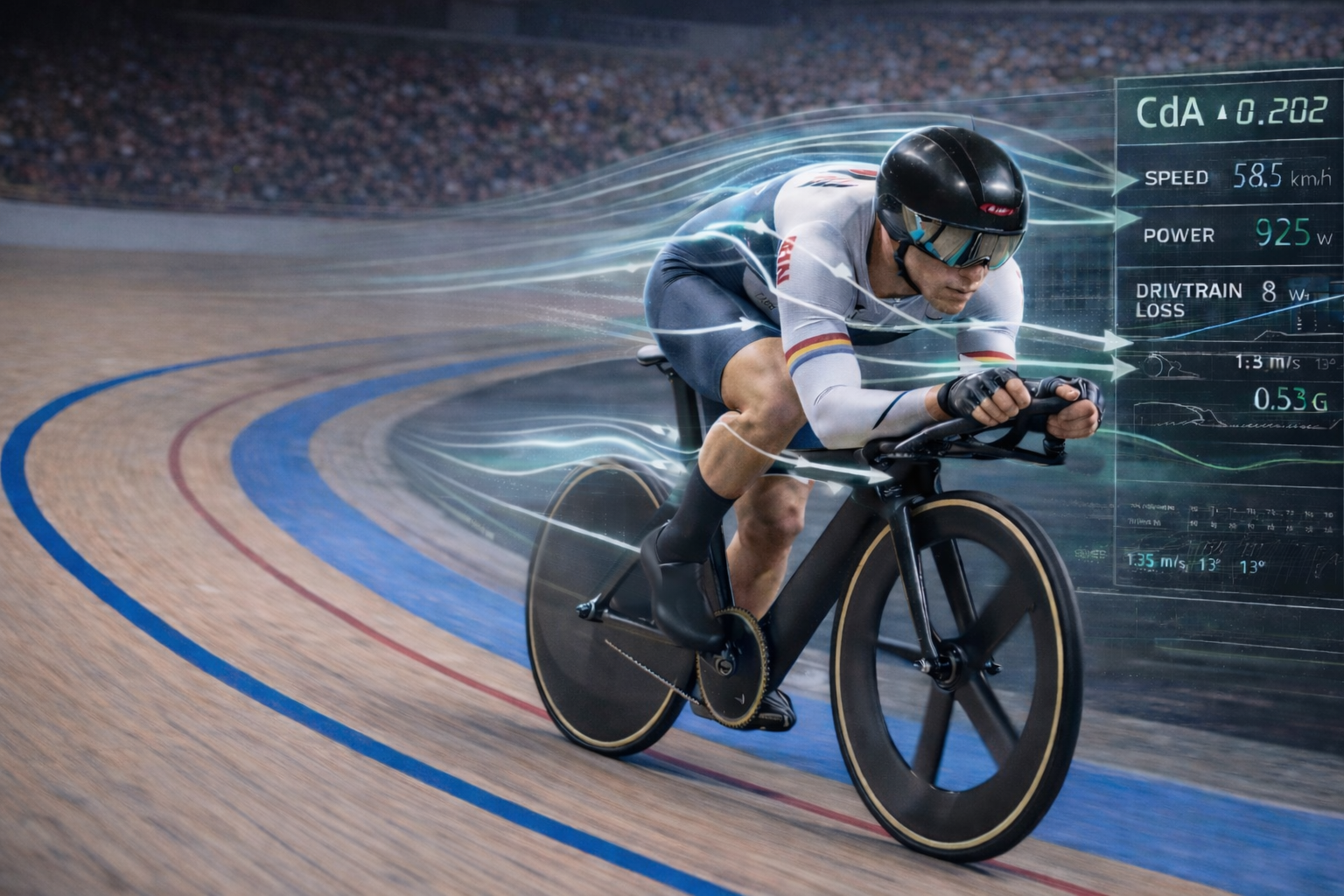
For years, China’s visual identity on the track was as disciplined as its racing. Riders lined up on the same Look bikes, and the impression was clear: one system, one template, one national way of doing things.
That is why the current shift is so interesting. The team no longer appears locked into one identical equipment setup, and that small visual change may say something larger. At elite level, equipment choice is never just cosmetic.
It reflects freedom, confidence and how much space a programme allows for individual needs inside the collective structure. China’s riders are still unmistakably part of a national system. They just no longer all look like copies of it.
That is why even the smaller outward signs now feel meaningful. The riders do not look rebellious or detached from the collective discipline of the team. They simply look a little more themselves. There is more sense of personality surviving the structure. Even visually, there are hints of a programme less locked into a single template than it once appeared, as though individual requirement may now be carrying a little more weight, even in equipment.
Whether that is a full strategic shift or simply a symptom of changing culture, it points in the same direction: a team that appears a touch less rigid, and perhaps more confident because of it.
Shanghai as the test
And then there is Shanghai.
In October 2026, the World Championships will come to China. For Benoit Vetu, that gives all of this a horizon. For the riders, it gives the next phase of the programme a home stage. And for the rest of the sport, it offers a chance to see something more than the familiar version of China that has lived in the imagination for so long.
Because the old story is already secure. Guo Shuang helped write it. Gong Jinjie and Zhong Tianshi drove it forward. Bao Shanju carried it on. Chinese women's sprinting does not need rescuing, and it does not need explaining into significance. Its authority was earned years ago.
What Shanghai offers is something different.
It offers a chance to see whether that history can become the foundation for something larger rather than the limit of how China is understood. Whether the next generation can carry not only medals, but personality. Whether a team that has so often been read from the outside as secretive and self-contained can grow stronger, not weaker, by being seen more clearly.
And perhaps most of all, it offers a measure of Vetu's real influence. Not whether he can produce another fast sprint squad - he has done that before, and done it brilliantly - but whether he can help shape a programme with enough confidence to widen without softening, to connect without losing discipline, and to become more than the sum of its most feared events.
That is the more interesting race now.
Not whether China can still sprint. The sport already knows that.
But whether one of track cycling's great specialist powers is becoming something broader, more human and, in the end, perhaps even harder to beat.