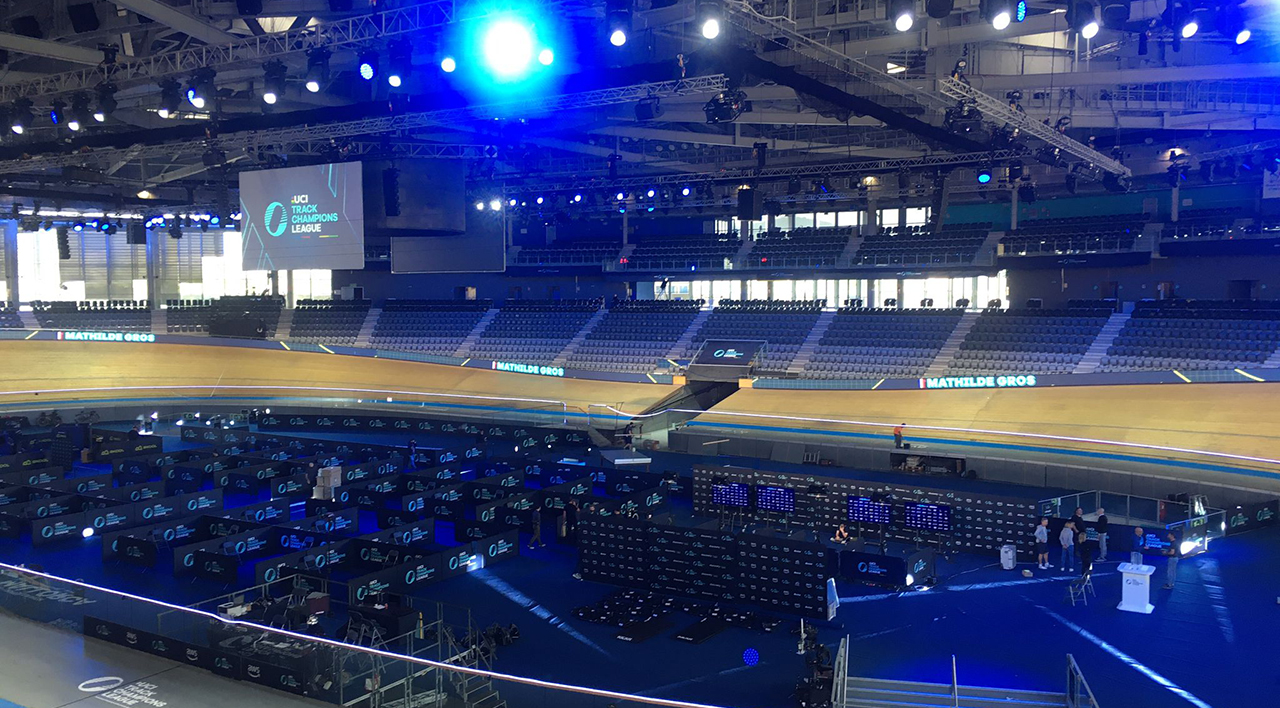
The National Velodrome at Saint-Quentin-en-Yvelines has grown into one of the clearest examples of what a serious modern cycling venue can be. It is home to the French Cycling Federation. It hosts national team activity. It has already staged world championships. And in 2024 it became the velodrome the Olympic Games used for track cycling in Paris.
That combination gives it unusual depth for a comparatively recent building. Opened in 2014, it did not have to wait decades to matter. It was designed to matter quickly, and then it kept justifying that ambition.
For a different kind of large modern track, see our feature on London Velodrome. Where London is tied closely to a single Olympic legacy story, Saint-Quentin-en-Yvelines feels more like a permanent national and international centre rolled into one.
Saint-Quentin-en-Yvelines quick facts
- Official venue name: Vélodrome National de Saint-Quentin-en-Yvelines
- Location: Saint-Quentin-en-Yvelines / Montigny-le-Bretonneux, Paris region
- Opened: 2014
- Track length: 250 metres
- Track width: 8 metres
- Role: home of the French Cycling Federation
- Major events: 2015 and 2022 UCI Track World Championships, 2016 European Championships, Paris 2024 Olympic track cycling
- Official regional venue page: Vélodrome National
Saint-Quentin-en-Yvelines timeline
- 2014 - The National Velodrome opens.
- 2015 - It hosts the UCI Track World Championships.
- 2016 - It stages the European Track Championships.
- 2022 - The Track World Championships return.
- 2024 - The Paris Olympic track cycling events are held there.
Why Saint-Quentin-en-Yvelines mattered
The first thing to understand about this velodrome is that it was never meant to be a one-off showpiece. It was built as a cycling centre. That distinction matters. A venue created as part of a national sporting structure usually ages differently from one built primarily for spectacle.
That is one reason Saint-Quentin-en-Yvelines feels so substantial. The building houses the French Cycling Federation and functions as a daily reference point for French track cycling. It has the weight of institutional life behind it, not just event memory.
That makes its later Olympic role more interesting, not less. The Games did not give this venue its first meaning. They amplified a meaning that already existed.
The track itself: 250 metres, 8 metres wide, and built for elite use
Official and venue-related sources describe the track as 250 metres long and 8 metres wide, which already sets it apart slightly in feel from narrower boards. The wider geometry is part of the building's identity as a top-level modern facility rather than a nostalgic throwback.
But, as with all velodromes, technical dimensions only tell part of the story. What matters is what the track enables: elite preparation, repeated major events, national team work and the capacity to absorb the pressure of the biggest occasions in the sport.
That is where Saint-Quentin-en-Yvelines has truly distinguished itself. It has not merely existed at Olympic standard. It has been used at Olympic standard.
The track that gave French cycling a modern national centre
Home matters in track cycling. Not in an abstract sentimental sense, but in a structural one. Riders and federations need somewhere serious to return to. Saint-Quentin-en-Yvelines gave French cycling that kind of centre of gravity.
That is why the venue matters even outside the weeks when the world arrives. It is where systems can be sustained, standards can be normalised and talent can see a clear pathway into elite sport.
In other words, it is not only a host venue. It is part of the machinery of French cycling.
The events that gave Saint-Quentin-en-Yvelines global weight
2015 and 2022 Track World Championships
World Championships always matter because they place a venue in the sport's memory. Hosting them twice matters even more. It tells riders, federations and the UCI that a building is trusted not just once, but repeatedly.
That return is one of the strongest signals any modern velodrome can receive. It says the venue has moved from promising to proven.
Paris 2024 Olympic Games
The Olympic Games changed the public identity of the venue instantly. Outside track cycling's usual circles, Saint-Quentin-en-Yvelines became the Paris Olympic velodrome. That label will stay with it for decades.
But what makes the story stronger is that the venue did not need the Olympics to validate it. The Olympics arrived at a track that was already nationally important and internationally established. That is a much more powerful sequence than building something new purely to host.
The riders who gave the venue its human weight
No velodrome becomes meaningful through infrastructure alone. Riders make the building legible. They give it tension, memory and emotional shape.
Saint-Quentin-en-Yvelines has accumulated that human weight through both French national team use and major championship racing. It is a venue where elite preparation and elite performance overlap. That overlap matters. It means the building does not belong only to one side of the sport.
It belongs to the work and to the spectacle.
Can the public use the velodrome?
Yes. Regional tourism and venue materials promote public activities and riding opportunities, which helps ensure the building remains more than a sealed elite compound.
That matters because the best modern velodromes usually combine seriousness with accessibility. They remain aspirational without becoming untouchable.
For venue information, the best starting point is the official regional venue page.
Why Saint-Quentin-en-Yvelines still matters
Saint-Quentin-en-Yvelines matters because it represents a particularly strong modern velodrome model. It is not important only because it hosted the Olympics. It is important because it already had national purpose, elite credibility and repeat international use before the Olympic spotlight arrived.
That makes it one of the sport's most complete recent venues: a national centre, a world championship track and an Olympic stage in one building.
Saint-Quentin-en-Yvelines FAQ
Where is the Saint-Quentin-en-Yvelines velodrome?
The National Velodrome is in Saint-Quentin-en-Yvelines in the Paris region, in Montigny-le-Bretonneux.
How long is the Saint-Quentin-en-Yvelines track?
The track is 250 metres long.
Why is the Saint-Quentin-en-Yvelines velodrome important?
Because it is home to the French Cycling Federation, a major national training centre and the velodrome used for the Paris 2024 Olympic track cycling events.
What major events has the venue hosted?
It has hosted the UCI Track World Championships in 2015 and 2022, the 2016 European Championships, and the Paris 2024 Olympic track programme.
Can the public use the venue?
Yes. Public activities and riding options are promoted through venue and regional materials.