The Mid-Cycle Question
We are roughly two and a half years from the LA 2028 Olympic Games. For any national track cycling programme with medal ambitions, this is the point in the cycle where the most important question shifts. It is no longer "what should we build?" It is "are we on track, or do we need to change course -- and how much room do we have left to do so?"
This is a mid-cycle assessment framed as a strategic opinion -- my honest view of what separates programmes that will be competitive in LA from those that will arrive with effort and good intentions but no realistic medal prospect. The arguments are structural rather than technical, because at this level the technical knowledge is widely shared. What distinguishes outcomes is strategic clarity, political mandate, and the discipline to execute without deviation over the full period between Games.
The Competitive Landscape Has Shifted
The first thing any programme must confront is that the competitive environment in Olympic track cycling has changed structurally over the past two cycles. More nations are capable of contesting medals now than at any point in the sport's recent Olympic history. New velodrome construction across Asia, South America, and the Middle East has lowered the infrastructure barrier that once limited serious participation to a handful of wealthy cycling nations. Knowledge that was once proprietary -- altitude protocols, aerodynamic testing methodologies, data-driven pacing strategies -- now diffuses rapidly through coaching movements, published research, and athlete transfers between programmes. The time between one nation's innovation and its competitors' adoption has compressed to months rather than years.
This means two things. First, any performance advantage is temporary, and the window to exploit it is narrower than most programme leaders assume. Second, the programmes that medal consistently are not those that possess a single breakthrough. They are the ones that layer marginal advantages across coaching, sport science, equipment, and athlete development -- and sustain that integration over a full Olympic cycle without losing strategic coherence. Denmark's men's team pursuit gold in Tokyo and Australia's in Paris demonstrated that different models can produce results, but both shared this characteristic: a clear strategic intent, maintained over years, resourced appropriately, and executed without significant deviation.
If I were assessing a programme's prospects for LA, the first question I would ask is not about watts or aerodynamics. It would be: has this programme maintained a consistent strategic direction since Paris, or has it been debating internally about what direction to take?
Start With Diagnosis -- And Be Honest About It
The foundation of any credible medal strategy is an honest competitive audit. I would want this completed within months of Paris, not years. The audit should benchmark current performance data against medal-winning performances from the past two Olympic cycles and against the projected trajectories of rival nations. It should assess coaching capability, sport science infrastructure, athlete depth, and equipment competitiveness -- not as isolated inputs but as an integrated system where weakness in any component limits the output of all the others.
The output should categorise events into three groups. First, events where the programme is genuinely competitive and the task is optimisation -- refining what already works, protecting the margin, and preparing for the specific tactical demands of LA. Second, events where credible medal potential exists but significant intervention is required within the next twelve months to close the gap. Third -- and this is where most programmes fail -- events where continued investment cannot be justified against the evidence.
That third category is where strategic discipline is tested. Most federations I have observed find it almost impossible to withdraw resources from an event, even when the data is unambiguous. Every event has a coach, a group of riders, a set of stakeholders, and an institutional history. Defunding an event means real consequences for real people. But maintaining investment across events with no realistic medal outcome is the single most common form of resource misallocation in Olympic track cycling. It does not feel like a mistake at the time -- it feels like keeping options open. In practice, the events with genuine potential end up under-resourced -- often without anyone having made a conscious decision to under-resource them.
Sprint Versus Endurance: The Decision Most Federations Avoid
One of the most consequential strategic decisions any track programme faces is resource allocation between sprint and endurance disciplines. Very few nations can fund both to world-class level simultaneously, and the evidence from recent Olympic cycles is unambiguous: the nations that have committed decisively to one or the other have won the medals.
The Netherlands' sprint programme is the clearest contemporary example. Under Hugo Haak's coaching, the Dutch made a deliberate choice to specialise -- concentrating resource, recruiting specifically for sprint characteristics, and building an entire support infrastructure around that single commitment. The result is Harrie Lavreysen's multiple Olympic and World Championship gold medals and a team sprint programme with genuine depth. The Dutch got there by funding one thing exceptionally well.
Something comparable happened in Denmark's men's team pursuit programme. Their Olympic gold and world record at the Tokyo Games was the output of years of deliberate investment in pursuit racing, underpinned by a systematic approach to rider development and a coaching philosophy that prioritised the event above individual road ambitions. They identified the team pursuit as their highest medal-probability event and built backwards from that conclusion.
Contrast this with Australia -- a nation with arguably the deepest combined talent pool in world track cycling, historically competitive across both sprint and endurance events. That breadth is enviable, but without clear prioritisation it becomes a liability: multiple programmes operating at eighty percent rather than one or two at one hundred.
A federation that has not yet made its resource allocation decision for Los Angeles has, in effect, already made it -- and made it badly. The nations that will win made their choice months ago and are now executing with full conviction.
Equipment and Technology: The Overlooked Variable
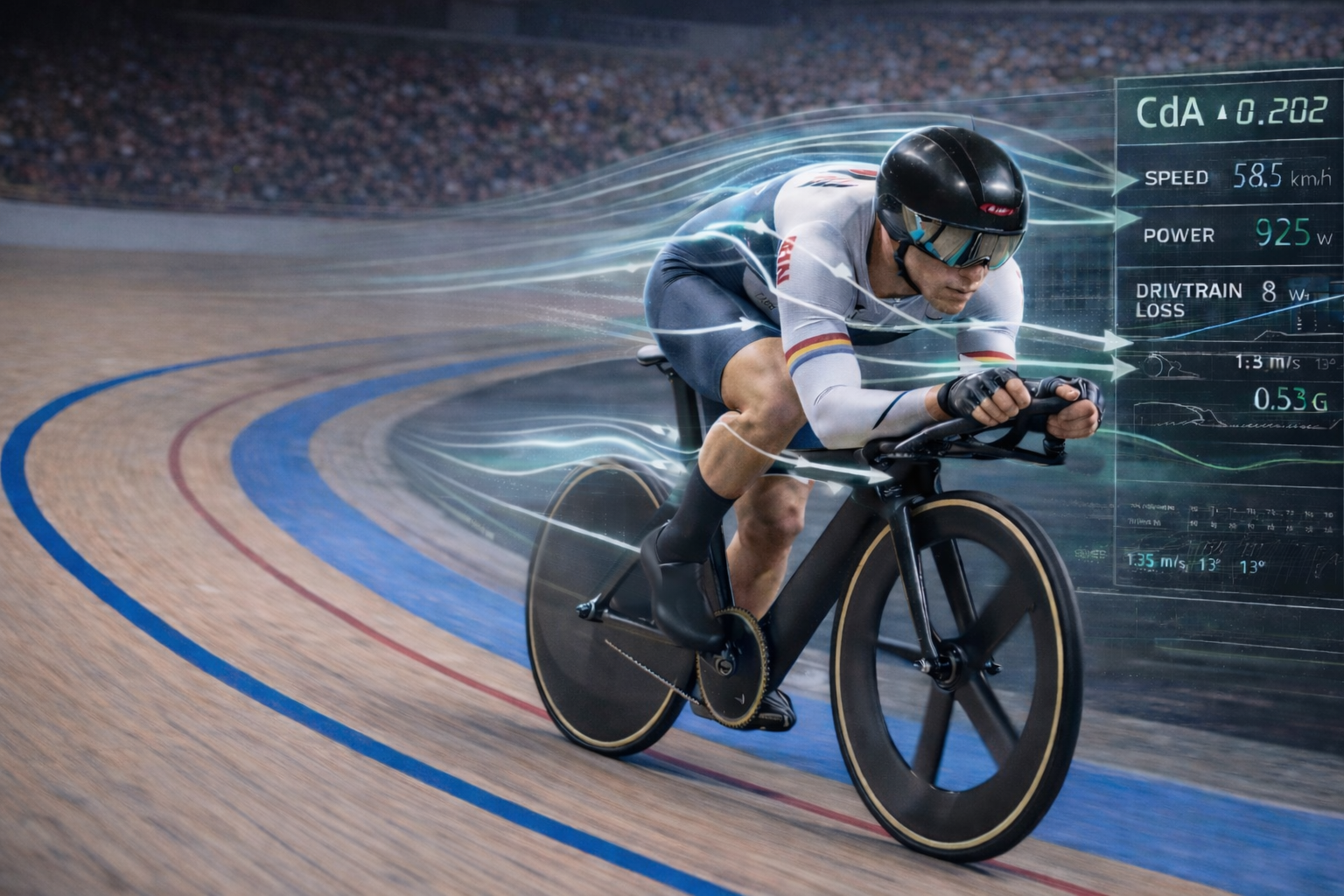
Resource allocation extends beyond coaching and athlete development. Equipment -- aerodynamic suits, wheels, frames, helmets -- represents a significant competitive variable that some federations treat as an afterthought and others treat as a programme pillar.
Germany's approach sets the benchmark. The FES -- Institut fuer Forschung und Entwicklung von Sportgeraeten -- is a government-funded research institute with roots in East German sports science that designs and manufactures bespoke frames, wheels and components exclusively for German Olympic athletes. The German track team rides equipment that cannot be purchased. It is purpose-built through a publicly funded R&D pipeline that treats equipment development as a core performance function, not a commercial arrangement. That institutional commitment to equipment innovation is a structural advantage that compounds across every Olympic cycle.
Great Britain's technological dominance through the Beijing and London Olympic cycles followed a similar logic, though through a different mechanism. The innovation that underpinned British Cycling's success was not driven by the sport itself -- it was a strategic decision made at system level, specifically by the Head of Innovation within the UK Sport Institute network, who identified aerodynamic and equipment gains as a priority and built the partnerships to pursue them. As Head Coach at the time, I can say honestly that we were the beneficiaries of system leadership that valued innovation rather than its architects. In 2006, I witnessed wind tunnel sessions where equipment modifications reduced aerodynamic drag by ten percent -- a gain equivalent to roughly two years of physiological training adaptation, delivered in a single development cycle. That is the scale of advantage that deliberate equipment strategy can unlock.
That institutional appetite has clearly survived within British Cycling. Their current partnership with Hope Technology has produced a striking, purpose-built track frame, and the programme retains both the budget and the organisational commitment to push equipment boundaries. It would surprise nobody who understands their history if what they bring to Los Angeles represents another step change.
Other nations have pursued manufacturer partnerships to close the gap. USA Cycling and the Danish federation have both worked with Canyon to develop dedicated track platforms, while Cycling Australia draws on concurrent relationships with Factor and Argon 18 to tailor equipment to their athletes' specific requirements. These partnerships can deliver meaningful gains, but the dynamic is inherently different from the German or British models -- a commercial manufacturer balances athlete needs against product development timelines, marketing priorities and intellectual property considerations in ways that a dedicated institute or a well-funded national programme with ring-fenced innovation resource does not.
None of this means every federation needs its own FES or its own Hope partnership. But equipment strategy deserves the same rigour and long-term thinking as coaching or sport science investment. At the margins that define Olympic track cycling,
Centralisation: The Non-Negotiable?
There is an ongoing debate within several national federations about centralised versus decentralised high-performance models. Decentralisation can appear progressive -- empowering regional centres, allowing athletes to remain closer to home, distributing expertise. At the sharp end of Olympic track cycling, centralisation is not a preference. It is a prerequisite.
Every programme that has sustained Olympic-level success in track cycling has operated from a centralised model. This does not mean athletes never train elsewhere, or that satellite arrangements cannot serve development pathways. But the athletes who will ride in qualification rounds and finals at an Olympic Games require concentrated training environments, coaching oversight, sport science integration, equipment testing and tactical preparation under a single chain of command.
Team pursuit demands synchronised preparation that cannot be replicated by athletes training in different cities and assembling periodically. Sprint programmes rely on daily technical feedback loops between coach, biomechanists and athlete that degrade across distance. The margins are measured in thousandths of a second. Distributed preparation cannot reliably deliver that precision -- and when the result is poor, distributed accountability means nobody owns it fully.
The programmes that resist centralisation typically do so for political rather than performance reasons -- regional federations protecting funding, coaches protecting autonomy, athletes preferring lifestyle convenience. These are legitimate institutional concerns, but they are not performance arguments. If a federation is serious about LA 2028 medals, the centralisation question should already be settled.
Up next: Part 2 of this series examines governance, political mandate, workforce development, the cultural architecture that underpins sustainable success, and what determines whether a programme peaks at the right moment.