In the ecosystem of Japanese keirin — where domestic G1 titles define legacy far more than international medals — this was not just another win. It was a statement of continuity.
Formation first
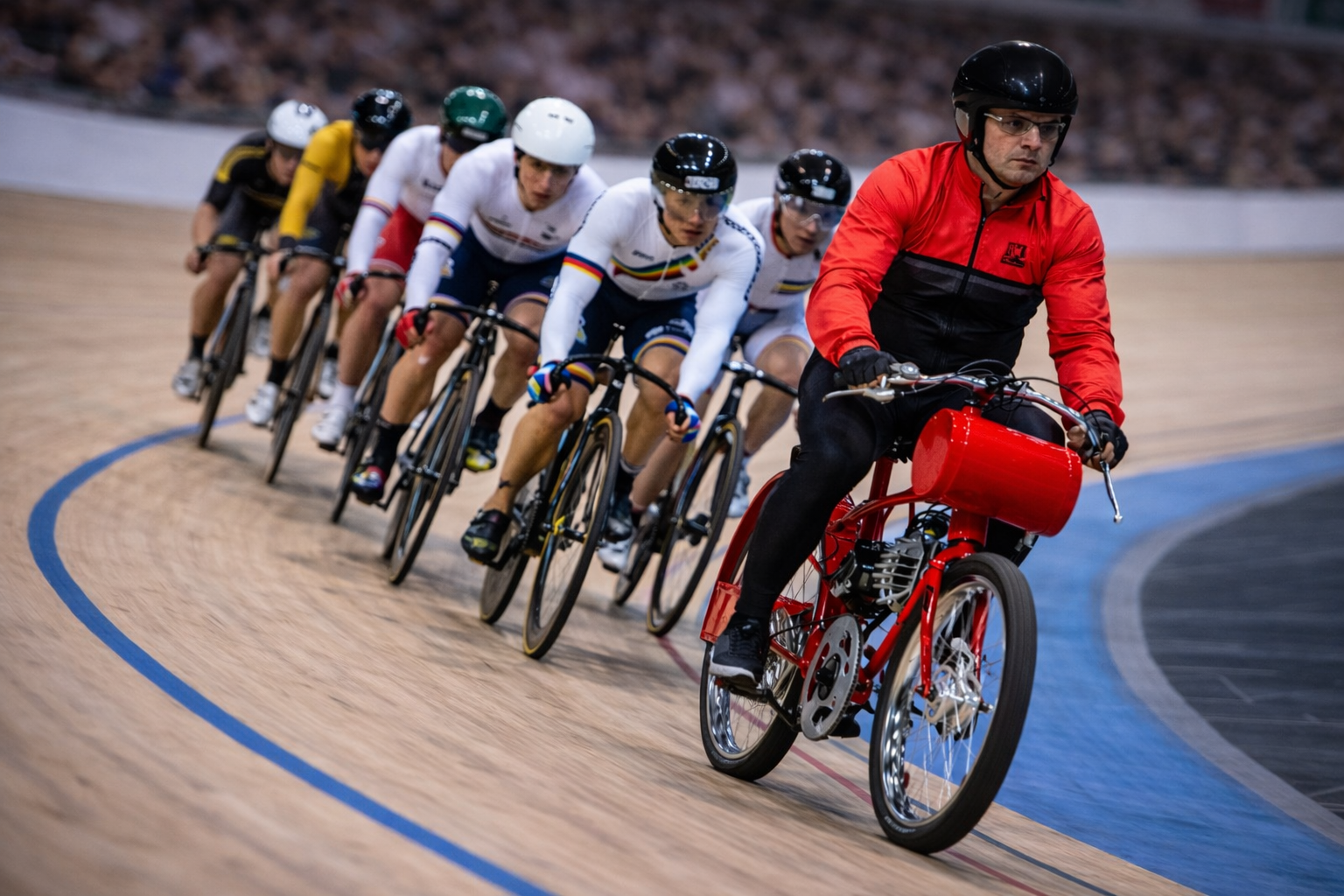
The nine-rider final settled early into a disciplined structure.
The Kinki quartet — Terasaki Kohei, Wakimoto, Yusaku Kosei and Shota Mitani — aligned at the front. Kohei Gunji and Takahiro Arai tracked behind, Kenya Yamaguchi rode independently, while Yuya Inubuse and Yuji Matsuura formed the Chugoku–Shikoku pairing at the rear.
The early laps were controlled, almost restrained. But with three to go, pressure began to build. Inubuse and Matsuura tested the line from behind, prompting Terasaki to subtly increase tempo at the front. Two laps from home, the pace rose sharply, snapping the field back into single file.
By the bell, the race had tightened completely.
The decisive move
The final lap opened still in formation. Wakimoto, checking movement behind him, chose his moment and accelerated. Kosei followed cleanly. Gunji attempted to respond but was expertly contained by Mitani’s positioning.
From there, separation was gradual but decisive.
Wakimoto and Kosei edged clear down the final straight, the gap steady rather than explosive. Wakimoto crossed first in 10.8 seconds, securing back-to-back All Japan Selection titles. Kosei followed at three-quarters of a length, with Yamaguchi taking third from a late outside surge.
This was not an opportunistic steal in the final metres. It was controlled execution of line strategy — timing, protection and trust in structure.
The weight of the “Double Grand Slam”
The victory carries historic resonance. Last year, Wakimoto completed what Japanese media termed a “Grand Prix Slam” across the six G1 races. With this repeat triumph, he has now won each of the five major G1 titles twice:
- All Japan Selection Keirin
- Takamatsunomiya Kinen
- All-Star Keirin
- Japan Championship Keirin
- Prince Tomohito Memorial
Should he add this year’s Keirin Festival, he would complete a so-called “Double Grand Slam”. Victory at the KEIRIN Grand Prix 2026 — for which he effectively secured qualification here — would elevate that to an unprecedented “Double Grand Prix Slam”.
In Japanese keirin terms, this is rare territory. Sustained G1 dominance across seasons demands not only power but political precision within line structures that shift constantly.
Kinki remain the axis
Beyond Wakimoto’s personal achievement, the race reinforced a broader truth: Kinki remain the central axis of Japanese keirin.
Terasaki dictated early rhythm. Wakimoto launched. Mitani neutralised threats. Kosei delivered the disciplined follow-through.
Each rider fulfilled a role. The line held.
The 2026 G1 calendar has only just begun. But after Kumamoto, the hierarchy appears intact.
If the balance of power is to shift this season, someone will have to break more than just a wheel.
They will have to break Kinki.