It is a small memory, the sort that would barely register in another sport.
Training is over. The session has finished. Outside, it is raining. One rider calls across the room that he has space in the car if anybody needs a lift home.
Nobody answers.
Not because nobody hears him. Not because nobody needs the lift. Just silence. A flat, awkward silence that hangs there for a second too long.
That memory has stayed with you because it explained something medals never could. British Cycling, in those years when it was becoming the defining force in world track cycling, did not only have speed, precision and an almost unnerving sense of control. It also had a particular emotional temperature. Riders could be winning together without ever quite feeling like a team in the ordinary human sense of the word.
If you want the easy version of British Cycling between 2006 and 2026, it is there in the results: Beijing, London, Rio, then the turbulence, the scrutiny, the sense of a programme losing both its aura and its authority, before the beginnings of something more hopeful. But the better version, the one people inside elite sport will recognise immediately, is about culture. About what winning concealed. About what riders only felt able to say later. About the way fear can pass as standards for years if the medals keep arriving. And about why the most interesting thing British Cycling may now be doing is not simply winning again, but trying to become a place riders and staff actually want to belong to.
For a long time, British Cycling looked less like a team than a machine. Beautifully built. Unquestionably effective. Sometimes, from the outside, almost joyless.
That was part of its power.
It was also, quite possibly, part of its problem.
By 2006 the outline was already there. Great Britain was not yet the complete Olympic superpower it would become, but the programme was moving with a seriousness that felt different from old British sporting hopefulness. This was not a system waiting for a good week. It was trying to engineer inevitability. Within two years, Beijing turned that seriousness into force. Four years later, London hardened it into mythology. British Cycling was no longer merely successful. It had become one of the defining high-performance institutions in British sport.
That success did more than fill medal tables. It created a story people wanted to believe. The story said this: a hard, disciplined, hyper-detailed system had found the answers. The riders were extraordinary, of course, but so was the environment. The standards. The structure. The seriousness. If all of this was producing that level of domination, then surely the whole thing must be right.
Olympic Track Golds: The Arc of Dominance
2008 Beijing - 7 Gold
2012 London - 7 Gold
2016 Rio - 6 Gold
2020 Tokyo - 3 Gold
2024 Paris - 1 Gold
The decline from dominance is clear in the numbers, but Paris also showed something else: this was not collapse, but the outline of a younger programme rebuilding in a different way
Elite sport loves that kind of logic because it is flattering. It allows institutions to treat success as moral proof.
But winning proves one thing only: that you won.
It does not prove the place was healthy. It does not prove the athletes were happy. It does not prove the costs were worth it. It does not prove power was used well.
Looking back now, that may be the central mistake people made around the first great British Cycling era. We treated medals as character references. We saw precision and assumed wisdom. We saw control and assumed strength. What we did not see clearly enough, because the programme was so spectacularly good at the public part of performance, was the emotional texture underneath.
The clearest clues arrived later, and mostly from the riders themselves.
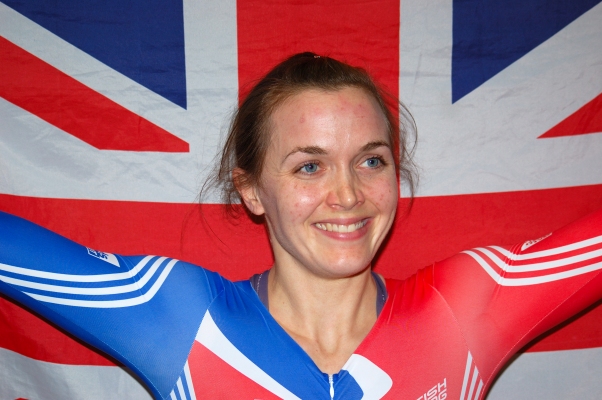
Victoria Pendleton's comments mattered because they did not come from the margins. They came from one of the defining athletes of that era. In May 2016, speaking publicly about Shane Sutton and the wider environment, she said the way she had been treated and the culture there had played "a big part" in her retirement. Then came the line that changed the feel of the whole retrospective: "I couldn't stay working with those people."
It is a devastating sentence because of how plain it is.
Not: it was difficult.
Not: it was demanding.
Not: it was complicated.
"I couldn't stay."
Once an athlete of that stature says that out loud, the old story stops holding so neatly. The medals remain. The greatness remains. But simple celebration becomes impossible, because now there is testimony. Now there is human evidence that whatever British Cycling had built, it had also become, for at least some of the people inside it, a place to escape.
The chronology around the Jess Varnish and Shane Sutton rupture matters, because this is where the old narrative really began to crack in public. Varnish's deselection and allegations erupted in spring 2016. Sutton resigned on 27 April 2016. In October 2016, British Cycling's board said it had upheld Varnish's allegation that Sutton had used inappropriate and discriminatory language. Then, in 2017, the independent review into the climate and culture of the World Class Programme was published and said a "culture of fear" had existed within the team.
That sequence matters because it shows how quickly the conversation changed. What had once been framed as the necessary hardness of a winning environment was now being examined as something else: a power structure capable of making riders feel vulnerable, unheard or afraid.
Varnish's own language sharpened that rupture. She said others were afraid to speak because of "the culture of fear that exists". The importance of that phrase is not only that it is dramatic. It is that people inside elite sport know exactly what it means. A culture of fear is rarely theatrical. It is usually quiet. It lives in selection rooms, training-ground glances, careful silences and the small calculations athletes make every day about what is safe to say.
That is where the rainy lift-home memory matters. Because it sounds so small. Because it is not.
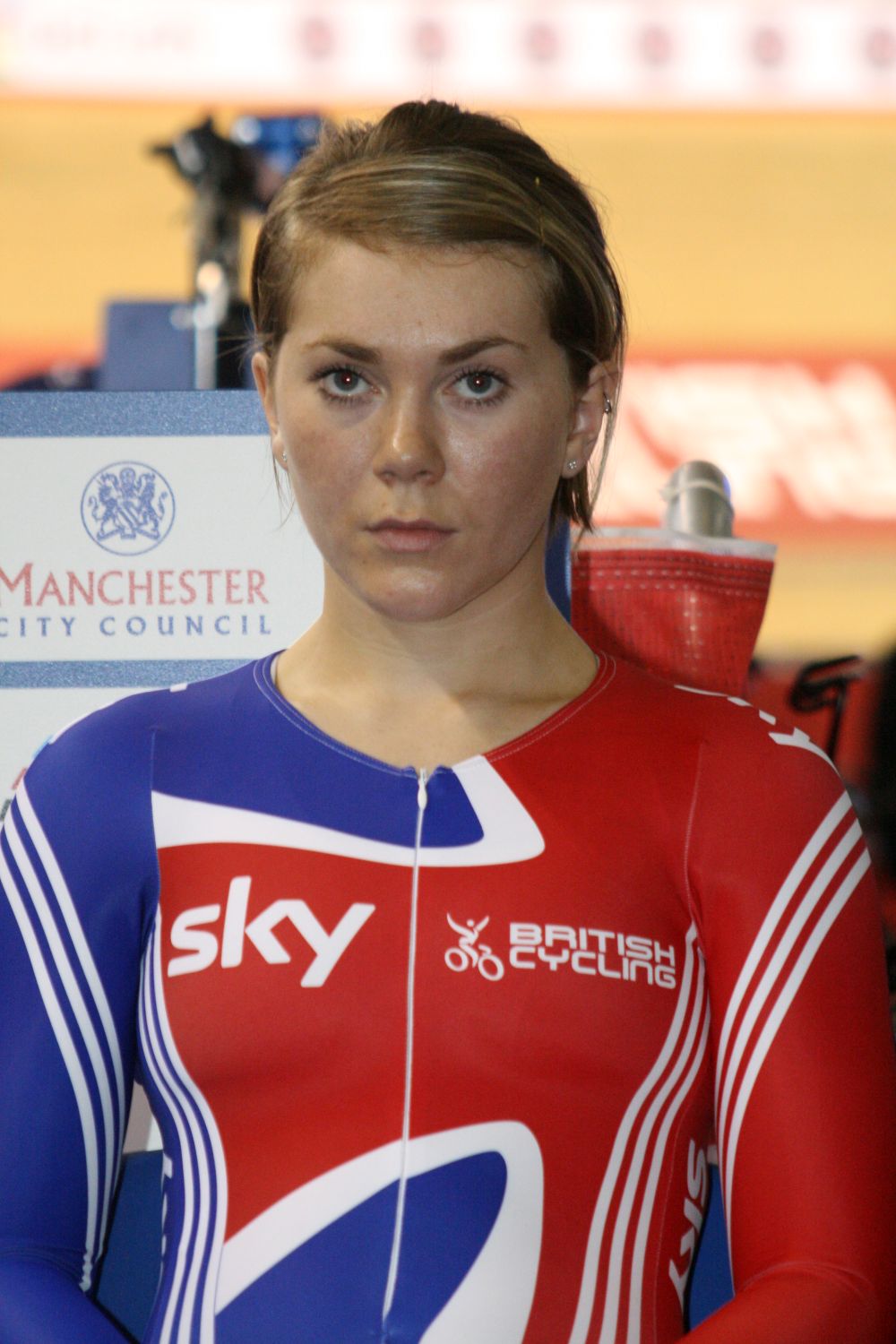
High-performance programmes reveal themselves in tiny moments. Who talks. Who does not. Who trusts whom. Whether teammates feel like allies or simply co-workers under pressure. Whether a session ending allows people to exhale, or whether the politics of selection and hierarchy are so embedded that even ordinary human interaction feels slightly risky. Great programmes can be hard. All serious programmes are hard. But there is a difference between a demanding environment and a guarded one. One asks a great deal of you physically and mentally. The other teaches you to protect yourself socially.
That, more than any slogan, is what many people mean when they call the old British Cycling environment militaristic. Not merely that it was strict. Strict can be good. Militaristic suggests hierarchy as identity. Obedience as culture. Emotional restraint as virtue. The sense that your usefulness matters more than your voice.
Some people inside the sport will always resist that reading. They will say all great systems are hard. They will say athletes often speak more freely once they are out. They will say centralised medal programmes are not meant to feel cosy.
There is some truth in that. Serious sport is not a wellness retreat. It is not meant to be easy, gentle or endlessly democratic. The best environments in the world ask extraordinary things of athletes and staff. They prize discipline. They make ruthless decisions. They cannot run on feelings alone.
But that is not really the argument here.
The argument is that elite sport spent years confusing emotional hardness with high standards. British Cycling became one of the clearest examples of that confusion. It built a world-class system, then allowed the success of that system to delay deeper scrutiny of how power and culture were operating inside it.
In other words, the programme was so successful that it bought itself time.
Time for difficult behaviours to be reframed as necessary.
Time for silence to look like professionalism.
Time for discomfort to be described as standards.
Time for people to tell themselves that the outcome justified the atmosphere.
Laura Kenny's response around that period remains important because it adds balance. She was not speaking as a dissenter from the outside. She was speaking as one of the programme's most successful athletes. In 2016 she said: "To know that it went on in my workplace upsets me... I don't want to see other people treated like that." That quietly undermined one of the oldest arguments used to defend unhealthy systems: that the feared figure at the centre is indispensable, that remove the hard edge and performance collapses. Often it does not. Often the system was bigger than the mythology around one individual all along.
Male voices matter here too, not because they replace the female testimony, but because they show the old environment was not only being described from one side of the programme. Callum Skinner, reflecting on the years after Rio and his own retirement, said what had begun as "a little bit of a cry for help" became "all too much about performance and not enough about getting better." It is such a revealing line because it captures the deeper problem with some medal systems: even distress can get processed as a performance-management issue rather than a human one.
Bradley Wiggins, writing much later in his 2025 memoir, made the criticism broader still. As later reporting on the book put it, he described racist, sexist and homophobic language within British Cycling and said that in elite cycling "the line between critical and derogatory was so blurred as to be meaningless." That should be handled carefully because it is retrospective testimony, not something he publicly drove in 2016. But it matters precisely because it suggests that what many people once treated as normal "hardness" could also contain language and behaviour that, viewed honestly, was corrosive.
Katy Marchant belongs in this story for a different reason. She is not only part of the hopeful ending. She is one of the bridge figures who lets you feel the distance between the older British Cycling and the current one. Back in 2016, amid the turbulence around the women's sprint programme, she spoke of riders being left to deal with "decisions of other people, not through any fault of our own". Then, eight years later in Paris, after winning Olympic team sprint gold with Sophie Capewell and Emma Finucane, she said: "There aren't two people I would rather get on the start line with."
That contrast is the article.
From exposure to trust.
From frustration to shared belief.
From a programme that often looked like a collection of individuals surviving pressure, to one that now, at least from the outside, looks much more like a collective trying to build something together.
This is where the current atmosphere matters so much, because it is not just an abstract theory built from old quotes and review documents. It is something you can feel when you walk through the team area now. There is still pressure everywhere, as there should be in an Olympic programme. Nobody serious is pretending otherwise. But the mood feels different. There are smiles in the track-centre camp. Riders and staff look more relaxed with one another. Support staff seem happy. The whole thing feels less like a machine people are trying not to upset, and more like a family, or at least a genuine collective, trying to build something special together.
That distinction matters. In the old environment, relationships, personalities and ordinary human messiness often seemed to sit uneasily against the performance script. There was an underlying sense that anything not directly reducible to output could be treated warily: distraction, complication, risk. The current programme appears much more comfortable with riders being human. Not less serious. Just less threatened by normal life. More adult in itself. More relaxed in its own skin.
That is not a soft point. It is a performance point.
Because cohesion is fast.
This is where culture stops being a moral essay and becomes a performance essay. In track sprinting especially, trust is not decorative. It shows up in how riders commit, how they process pressure, how they recover psychologically from mistakes, how they inhabit the holding area before a final, how they communicate, how they share risk. The best modern systems are not softer than the old ones. They are often clearer, more honest and more emotionally functional. They do not lower standards. They stop using fear as the primary delivery mechanism for standards.
That is why Paris 2024 felt so important. It was not only that Marchant, Capewell and Finucane became the first British women ever to win Olympic team sprint gold in a world record time of 45.186. It was the way the moment looked and sounded. It felt openly shared. It felt warm. It felt like three riders who genuinely wanted to be in the same fight together.
And the results since then have stopped that optimism sounding sentimental. The same trio backed up their Olympic title with world success later in 2024, and Emma Finucane has since emerged as one of the standout young figures in the programme. The sprint group looks alive. The mood around it feels young.
Then there is Matthew Richardson, whose arrival adds another layer to the story. He matters for obvious sporting reasons: world-class speed, depth, stimulus. But there is also a cultural point here. Old British Cycling mythology liked the programme to feel self-contained: we build, we know, we lead. Modern high performance is more porous than that. It borrows. It imports energy. It steals ideas. If Richardson brings not only speed but also a slightly different sprint identity, a different emotional rhythm, a different way of inhabiting elite pressure, that matters too. It suggests a programme more comfortable with exchange, less protective of old identities, more open to renewal.
The current British setup looks less guarded, more connected, and increasingly comfortable in itself. The mood around the present programme feels different: younger, warmer, and more openly collective.
There are smaller signs of that confidence as well. The improved presentation of domestic track racing, the effort to package national championships more openly, the sense of a governing body willing to show more of itself rather than hide behind the old bunker mentality. These things sound peripheral compared with Olympic medals. They are not. The way an organisation presents itself publicly often tells you something about how it feels internally. Bunkered systems tend to look defensive. Confident systems are more willing to be seen.
Which brings us to the sharpest line in this whole 20-year story:
British Cycling's golden era was so successful that it delayed scrutiny of behaviours and structures that would have been challenged much earlier in a less dominant programme.
That is not a cheap shot. It is how power works in elite sport. Winning buys silence. It buys patience. It buys deference. It buys the benefit of the doubt. And sometimes it buys something more dangerous: a story so flattering that the institution starts believing the medals excuse what the people inside it are learning to endure.
The strongest version of the current British Cycling project would not merely reject that logic in words. It would disprove it in practice.
It would show that a team can be open and still exacting.
Warm and still ruthless.
Human and still world class.
It would show that the opposite of fear is not softness. It is trust.
And trust, in elite sport, is not sentiment. It is infrastructure.
That is why this retrospective does not really end in Beijing or London, glorious though those years were. It ends in the present tense. In the excitement around the current women's sprint group. In the younger feel of the programme. In the sense that riders appear less guarded, that success looks more shared, that the institution is trying to look outward rather than inward. In the possibility that British Cycling has finally grasped something obvious and difficult at the same time: medals are not diminished when athletes are allowed to be fully human on the way to them.
The programme has already proved it can build champions in a hard system.
The real question now is whether it can build another dynasty without the people inside it one day looking back and wondering what, exactly, they had to become in order to belong.
For years, British Cycling taught the sport how to win.
What makes this moment so interesting is the possibility that it may finally be learning how to win without leaving quite so much damage behind.